The Property
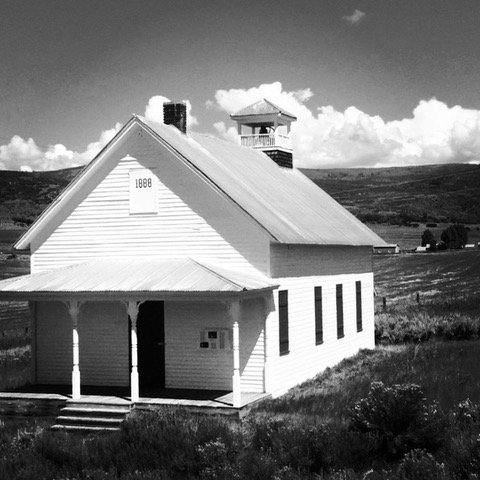
From the Coulters in 1882 to Out of Bounds Ranch in 2021
The modern story of Out of Bounds Ranch begins in the 1880s, when Albert L. and Robert P. Coulter were among the first ranchers to establish themselves on this part of Upper Cattle Creek and Missouri Heights following the opening of the former Ute lands to settlement. Their connection to the land was established first through water. The Prior Ditch and the Coulter West Side Ditch, dating to 1882, are among the earliest water rights associated with the ranch—years before the Coulters received federal patents to portions of the property in the 1890s.
The Coulters helped establish more than individual ranches. They were part of the generation that transformed this remote landscape into a small agricultural community built around water, cattle, hay fields, neighbors, roads, and the Upper Cattle Creek School.
Over the decades, portions of the land passed through families whose names remain part of its history, including the Millers, Heuschkels, and Goulds. Other historic properties were eventually brought together as well, including the upper-ranch lands associated with Charles P. Renftle in 1939 and later acquired by Virgil and Joyce Gould.
By the second half of the twentieth century, the Gould family had assembled important pieces of what would eventually become the ranch we know today. That land later passed to Jeff Gordon and JG Real Property LLC, and ultimately to the Smith family through BWI Financial LLC, where the separate pieces of this historic landscape became today’s Out of Bounds Ranch.
Although the names on the deeds have changed, many of the fundamentals have not. Water still moves through ditches first dug more than 140 years ago. Cattle still graze the high country. Wildlife continues to move across the same mountains and valleys. Today, Out of Bounds Ranch is being shaped by a commitment to carry that legacy forward—preserving its history, restoring and caring for the land, protecting its agricultural character and wildlife habitat, and leaving it better for the generations that follow.
Water Before Title: The Lifeblood of the Ranch
1882 Senior Water Rights
At Out of Bounds Ranch, the history of the land cannot be separated from the history of its water.
Long before there was an Out of Bounds Ranch—and years before federal patents formally conveyed portions of this land into private ownership—settlers in the Upper Cattle Creek country were already looking to the mountain streams above them and figuring out how to bring that water to the ground they hoped to farm.
In Colorado, particularly in the arid West, owning land was only part of the equation. Without water, very little could happen. Hay could not be grown, cattle could not be supported through the winter, and a permanent agricultural community could not take hold. The early ditches that cross the ranch were therefore not simply improvements to the property. They were part of what made settlement here possible.
The First Water
Some of the earliest documented water associated with the ranch dates to 1882.
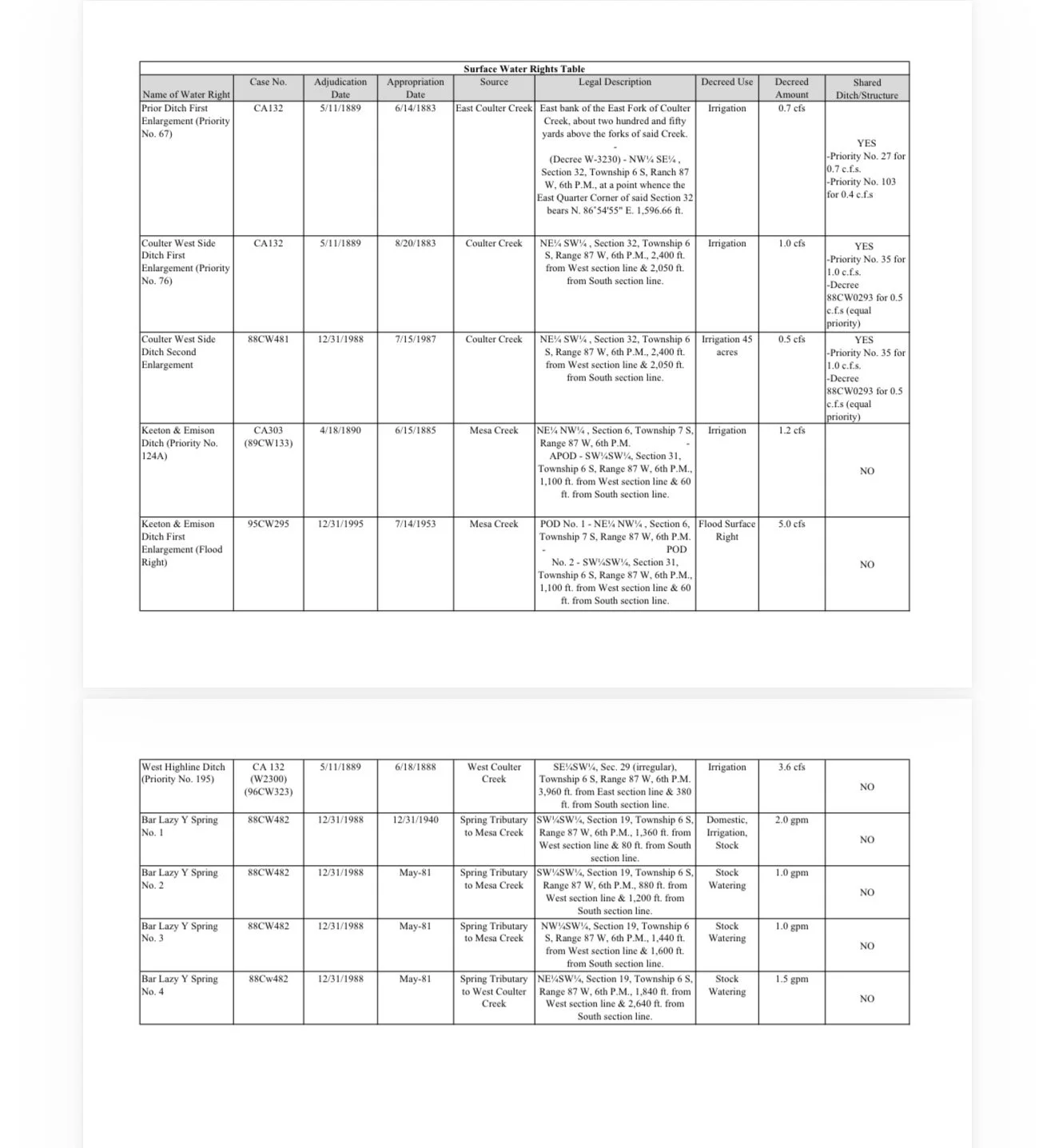
The Prior Ditch carries an appropriation date of May 10, 1882, making it one of the oldest known water rights associated with the land that would eventually become Out of Bounds Ranch. Its historic point of diversion is on Coulter Creek, in the area that became part of the early Coulter ranching landscape. The right was later recognized in the early adjudication of water rights in the district and carries a historic priority dating to those first years of settlement.
Just over a month later, on June 1, 1882, water was appropriated through what became known as the Coulter West Side Ditch. The name itself preserves the connection to the Coulter family, whose presence here is woven into the earliest recorded history of the ranch.
These dates are especially significant because they precede the federal patents ultimately issued to Robert P. Coulter and Albert L. Coulter in the 1890s.
In other words, water came before title.
The Coulters and their neighbors were developing irrigation infrastructure and putting water to beneficial use years before the federal government completed the complicated process of surveying, selling, and patenting much of the former Ute country in this part of Colorado.
That sequence tells us something important about the way the ranch was born. The first chapter was not written at a courthouse or on a deed. It was written on the ground—with picks, shovels, headgates, ditches, and water moving downhill.
A Landscape Shaped by Colorado Water Law
Colorado’s system of water rights grew from a simple but powerful principle developed by the miners, farmers, and ranchers of the nineteenth-century West: first in time, first in right.
Rather than tying the right to water solely to ownership of the land beside a stream, Colorado recognized the right of an individual to divert water and put it to beneficial use elsewhere. The date that use began became critically important. During a shortage, an older—or senior—water right generally receives water before a younger—or junior—right.
That system became known as the Prior Appropriation Doctrine, and it remains fundamental to Colorado water law today.
For a ranch established in the early 1880s, those dates matter.
The Prior Ditch and Coulter West Side Ditch were ultimately included in the historic adjudication of water rights completed in 1889. Their priorities place them within the earliest generation of agricultural water development in the Upper Cattle Creek and Coulter Creek country.
Those old priority dates are more than legal entries in a water-rights book. They are surviving evidence of the people who first attempted to make an agricultural life here.
Mesa Creek
Water also reaches the ranch through Mesa Creek, a small mountain stream with a particularly unusual relationship to Out of Bounds Ranch.
Mesa Creek originates in the upper country of the ranch, leaves the property as it travels downstream, crosses neighboring lands, and eventually returns to the lower ranch.
Historic rights associated with Mesa Creek include the Keeton & Emison Ditch, whose original appropriation also dates to May 15, 1882, followed by a later enlargement of the ditch.
Like the Coulter Creek rights, these early Mesa Creek appropriations reflect just how quickly water became central to settlement of the area. Within months of the opening of this landscape to widespread non-Ute settlement, water was already being claimed, diverted, and carried across the land to create irrigated meadows and agricultural ground.
Today, Mesa Creek remains part of the natural and historic spine of the ranch—connecting the high country, wildlife habitat, historic grazing areas, Red Gate Corral, and the irrigated lands below.
Storing Water for the Dry Months
As ranching expanded, early settlers learned that diverting water directly from mountain streams was not always enough. Spring runoff could provide abundant water, while late summer might bring much less.
The answer was storage.
In 1898, an appropriation was made for what became the Privately Owned Consolidated Reservoir, located high in the Coulter Creek watershed. Beginning with a senior 595-acre-foot storage right appropriated on September 8, 1898, Consolidated Reservoir ultimately developed decreed storage rights totaling 1281.6 acre-feet through the original right and subsequent enlargements, giving ranchers the ability to capture water when it was available and release it later when the land needed it most.
That represented an important evolution in local agriculture.
The earliest settlers had first dug ditches to move water. The next generation began building infrastructure to manage water across seasons.
The reservoir became a shared resource among neighboring ranching interests—a reminder that western water has always required cooperation as much as independence. Ditches crossed property lines. Streams flowed from one ranch to another. Reservoirs served multiple owners. Headgates, diversions, maintenance, and shortages forced neighbors to work together.
More than a century later, Out of Bounds Ranch continues to hold an interest in the Consolidated Reservoir.
More Than 140 Years of Irrigation
Many of the places where water moves across Out of Bounds Ranch today follow the same basic routes established by ranchers generations ago.
Technology has changed dramatically. Earthen ditches have been supplemented by pipelines. Modern pumps can move water uphill. Sprinklers distribute it more efficiently. Measuring structures allow flows to be monitored more accurately. New infrastructure reduces seepage and helps make better use of a finite resource.
But the purpose is remarkably similar to what it was in the 1880s:
capture the water when it is available, move it carefully, put it to productive use, and waste as little as possible.
That responsibility has become an important part of the modern stewardship of Out of Bounds Ranch.
Recent improvements have focused on replacing aging and inefficient infrastructure, reducing water loss, improving delivery systems, and allowing the ranch to irrigate its agricultural ground more efficiently. These projects are expensive and often largely invisible once completed, but they are among the most consequential investments we can make in the long-term health of the land.
Healthy irrigation supports more than ranching.
It sustains historic hay meadows and working agricultural lands. It helps maintain soils and vegetation. Irrigated ground provides important seasonal forage for elk, deer, and other wildlife. Water moving through the ranch supports riparian corridors, wetlands, birds, insects, and countless other species that are part of this ecosystem.
Carrying the Water Forward
When the first ditches were dug here in the 1880s, the people building them could not have known what this landscape would look like more than 140 years later.
They would, however, recognize the water.
They would recognize Coulter Creek running in the spring. They would recognize Mesa Creek coming down from the high country. They would understand the purpose of a headgate and the importance of watching a ditch. And they would certainly understand what it means to look toward the mountains and wonder whether there will be enough water for the season ahead.
That continuity is one of the things that makes the water history of Out of Bounds Ranch so meaningful to us.
The names on the deeds have changed. The ranch has grown and evolved. But much of the water still follows paths first established by the people who worked this land more than a century ago.
Our responsibility today is not simply to possess those historic water rights. It is to care for the resource behind them—to use it thoughtfully, improve the systems that carry it, protect the watersheds from which it comes, and preserve the working landscape it has sustained for generations.
At Out of Bounds Ranch, water is more than a resource.
It is part of the history of the ranch, part of the life of the land, and part of the legacy we have a responsibility to carry forward.
2026: A Year of Stewardship and Progress
The year 2026 marked an important chapter at Out of Bounds Ranch—a year focused on improving the land, protecting its resources, strengthening the ranching operation, and planning for the future.
Across the ranch, projects large and small were undertaken with a common purpose: to leave the property healthier, more resilient, and better cared for than we found it.
Investing in Water
One of the most significant projects of the year was a major improvement to the ranch’s irrigation system.
For generations, water has shaped this property. Historic ditches dating to the early 1880s helped make agriculture possible here, but portions of the modern delivery system had become increasingly inefficient. In some areas, substantial amounts of water were being lost before ever reaching the fields.
In 2026, Out of Bounds Ranch made a major investment in piping water from the headgate toward the pump house, replacing an inefficient portion of the delivery system with infrastructure designed to conserve water and improve reliability.
The project represents more than an operational improvement. It is part of a larger commitment to responsibly manage the ranch’s historic water resources while continuing the agricultural use of the land.
Additional work during the year included improvements around headgates and measuring structures, protection of irrigation risers, and continued maintenance of the ranch’s extensive network of ditches, pipes and sprinklers.
Caring for the Land
Stewardship in 2026 extended well beyond irrigation.
We continued extensive forest and fuels-management work, reducing hazardous vegetation, improving defensible space and helping create healthier forest conditions across portions of the ranch.
Trees and native vegetation received particular attention. Mature cottonwoods were carefully trimmed, younger trees were protected from wildlife damage, and areas disturbed by ranch work were prepared for reseeding.
Along the route from Alvie’s Gate toward the pond beyond Red Gate Corral, we cleared and chipped accumulated woody material, improving both the appearance and long-term health of the landscape.
Weed management also remained an important part of the year’s work, with continued efforts to control invasive species and encourage healthier native grasses and vegetation.
Improving the Working Ranch
Out of Bounds Ranch remains a working agricultural property, and many of the improvements made in 2026 were designed to ensure that it can continue functioning as one.
Fencing was repaired and expanded, including work along County Road 121. Irrigation infrastructure was protected from livestock and wildlife. Drainage improvements, including gutters at the Toy Barn, addressed areas where runoff could damage buildings or surrounding ground.
Fields and disturbed areas were evaluated for fall seeding, while plans continued for improving agricultural production on portions of the lower ranch.
These projects may not always be the most visible improvements, but together they form the foundation of a healthy working ranch.
Protecting Wildlife Habitat
The ranch is also home to elk, deer, bear, turkey and many other species that move through the property and the surrounding public lands.
Much of the work undertaken in 2026 was therefore approached with wildlife in mind.
Forest thinning, vegetation management, water improvements and protection of young trees all contribute to a more resilient landscape. At the same time, the ranch continued looking for practical ways to balance agricultural needs with the enormous wildlife presence that defines this part of Colorado.
That balance—between ranching, habitat and open space—is central to the long-term vision for Out of Bounds Ranch.
Preserving the Story of the Ranch
2026 was also a year of looking backward.
A major historical research effort began to document the people, water rights, land records and community history connected to Out of Bounds Ranch.
Federal land patents, county deeds, nineteenth-century water records, historic maps and local oral histories have begun revealing a story that reaches from the Ute homeland through the earliest Coulter ranches, the Miller and Heuschkel years, the Gould family era and into the ranch of today.
Old places on the property—including irrigation ditches, the Red Gate Corral, the upper cabin and the nearby Upper Cattle Creek Schoolhouse—are being documented so that their stories are not lost.
Understanding that history has influenced how we think about stewardship today.
Looking Forward
There will always be another fence to repair, another ditch to clean, another stand of timber to manage and another field that can be improved. That is part of owning a working ranch. But 2026 demonstrated what can happen when those individual projects are viewed as parts of something larger.
Water was conserved. Forests were improved. Infrastructure was rebuilt. Wildlife habitat was considered. Historic records were recovered. Public-land opportunities were advanced. And plans were made with the expectation that this land should continue functioning as open, productive ranch country for generations to come.
At Out of Bounds Ranch, stewardship is not a single project. It is the ongoing work of caring for the land—one season, one improvement and one generation at a time.