Explore The Ranch’s History
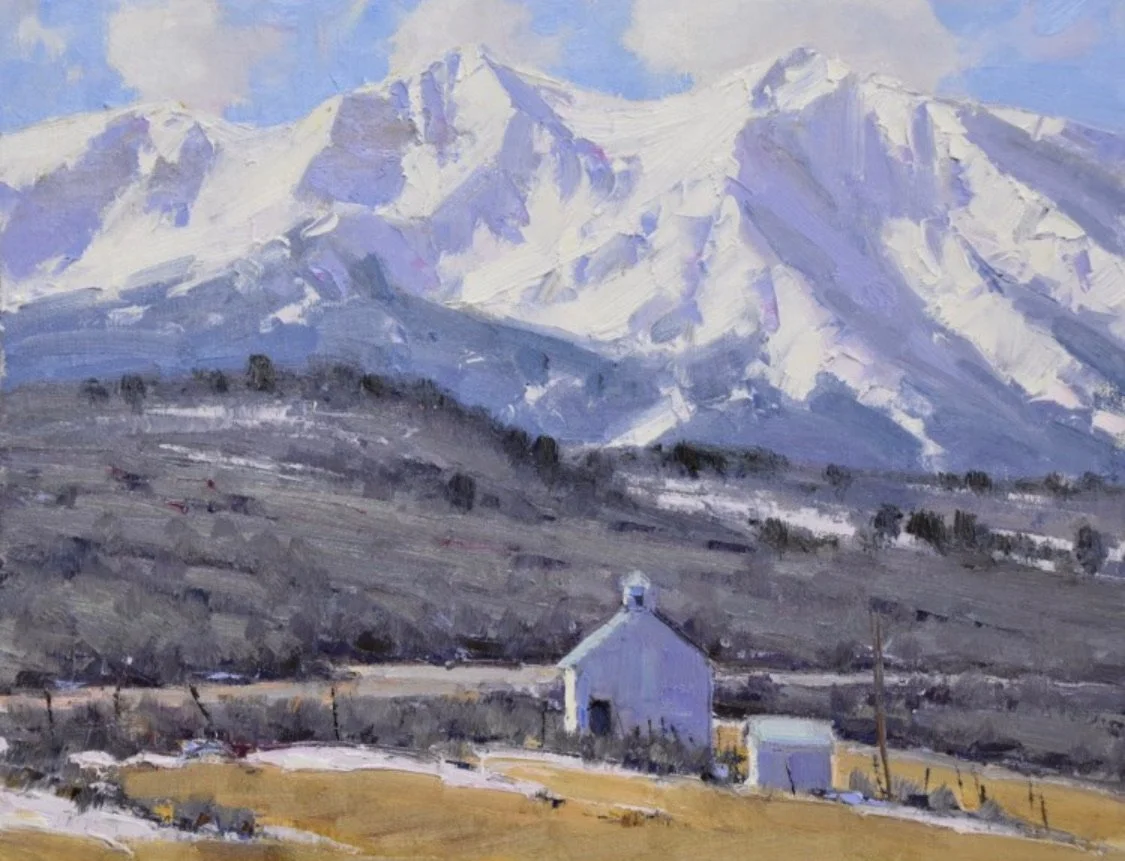
Before the Ranch: The Ute Homelands
Chief Ouray and Wife Chipeta
Respected Leaders and Diplomats
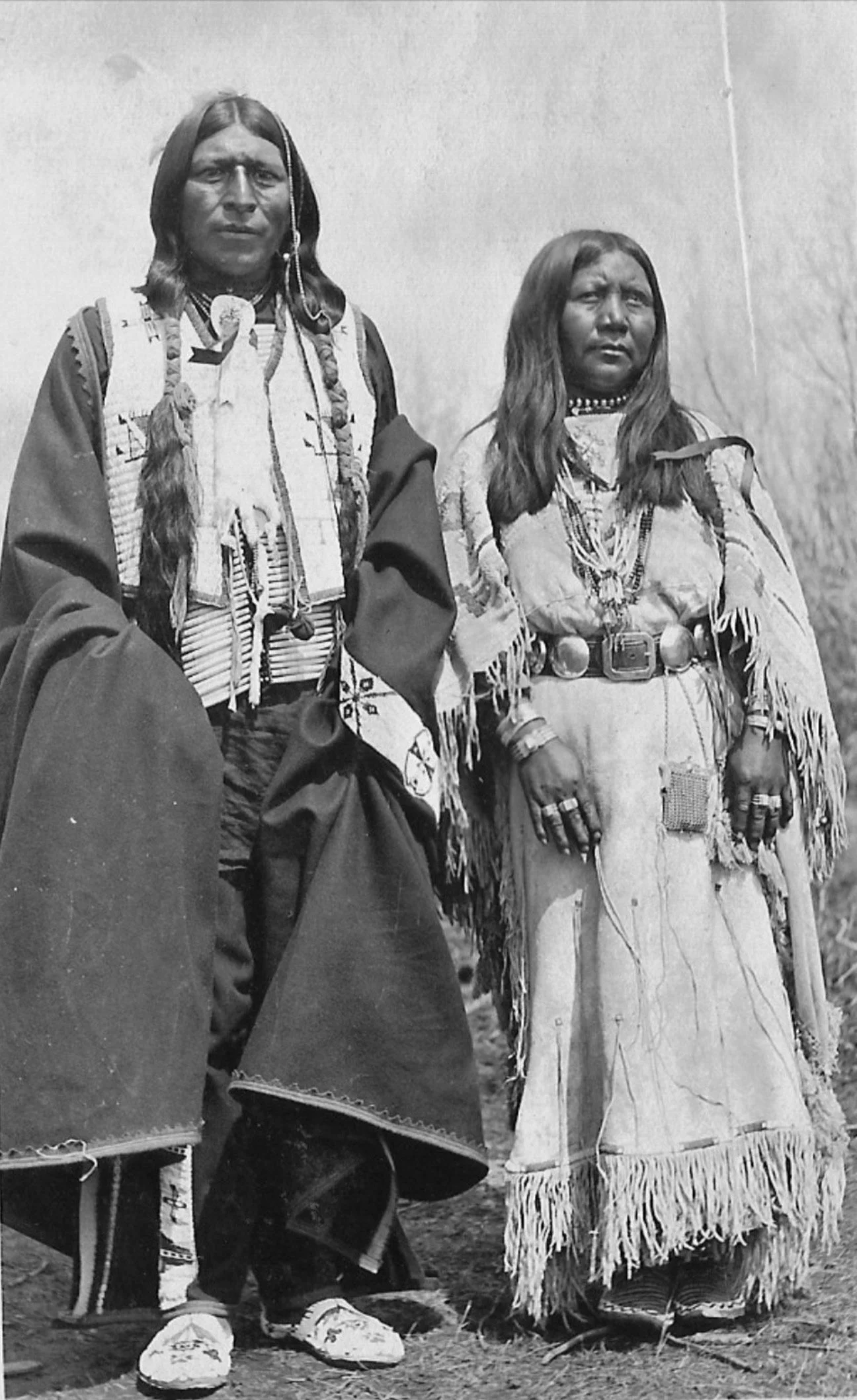
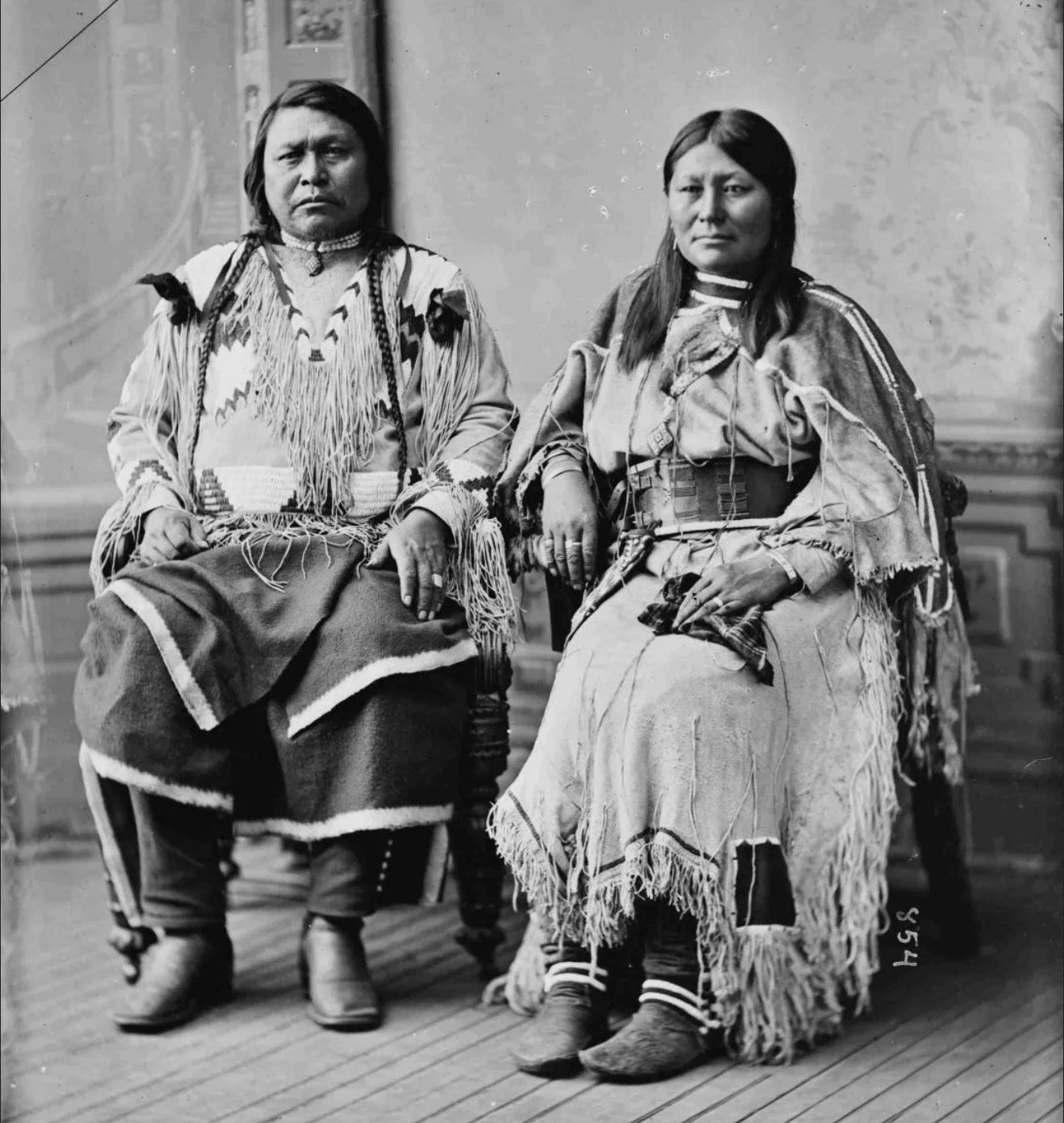
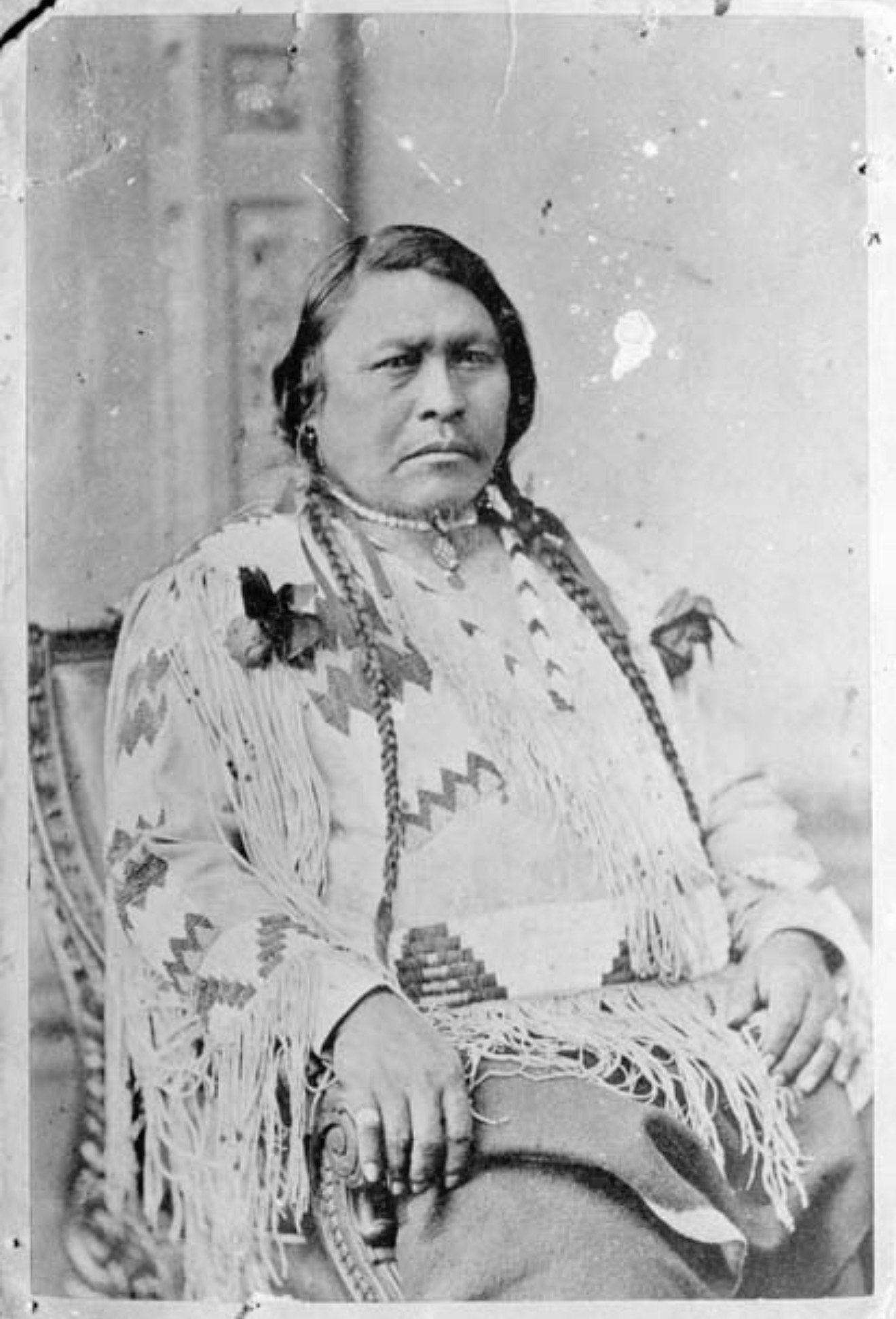
Ute Homelands
Before fences, irrigation ditches, county roads or federal land patents, the mountains and valleys surrounding what is now Missouri Heights were part of the homeland of the Ute people. For generations, Ute bands lived, traveled, hunted and gathered throughout the mountains of western Colorado.
The Roaring Fork Valley, the Colorado River corridor near present-day Glenwood Springs, and the high country surrounding Cattle Creek were all part of a much larger landscape that the Utes knew intimately and moved through according to season, weather, wildlife and available resources. The land that would eventually become Out of Bounds Ranch was part of that world.
A Landscape Before Property Lines
The boundaries we recognize today did not exist. There were no ranch parcels, Bureau of Land Management boundaries or National Forest lines. The landscape was connected—from the river valleys to the mountain parks and from the lower winter country into the high summer ranges. Water, wildlife and geography shaped movement across the land. That history is important to understanding Out of Bounds Ranch because many of the natural features that define the ranch today—its creeks, springs, open meadows, forests and mountain passes—were part of the landscape long before they appeared on a deed or survey.
A Period of Profound Change
During the nineteenth century, increasing American settlement in Colorado brought dramatic changes to the Ute homeland. Treaties and agreements progressively reduced Ute territory as miners, settlers, roads and communities moved farther into western Colorado. Those pressures intensified during the 1870s. Following the events of 1879 and subsequent negotiations with the federal government, most of the Ute people remaining in northern and central Colorado were compelled to leave the Western Slope. By 1881, the removal was largely carried out, with Ute communities relocated primarily to reservation lands in present-day Utah. Other Ute communities remained in southwestern Colorado. The removal opened an enormous portion of western Colorado to a very different system of land ownership. Land that for generations had been part of a Ute homeland would soon be surveyed into townships, sections and quarter-sections and transferred into private ownership under federal law.
From Ute Land to Federal Land
Congress established a process for disposing of portions of the former Ute lands, including legislation enacted in 1882. Federal surveyors began imposing the rectangular survey system across the landscape. Land offices accepted applications and payments. What had once been an interconnected homeland was gradually transformed on government maps into numbered parcels available for settlement and purchase. Historical land records from this period sometimes identify these properties as part of the “Ute Series,” a designation that survives today in federal and county records associated with some of the earliest parcels in the Out of Bounds Ranch area. The federal government ultimately sold portions of the former reservation lands, with proceeds handled under laws relating to the Ute people. These records are an important reminder that the transition from Ute homeland to privately owned ranch country was not simply the settlement of previously unoccupied land. It was part of a much larger transformation of western Colorado following the displacement of the Ute people.
The Beginning of the Ranching Landscape
Remarkably, the agricultural history of this particular land began almost immediately. Some of the earliest documented water rights associated with what would eventually become Out of Bounds Ranch date to 1882 and 1883. The Prior Ditch carries an appropriation date of May 10, 1882, and the Coulter West Side Ditch dates to June 14, 1883. Those dates are particularly significant because they precede the federal patents ultimately issued for portions of the ranch to members of the Coulter family in the 1890s. In other words, people were already diverting water, building irrigation systems and beginning to create an agricultural landscape before the federal government had completed the process of conveying title to the land. That transition—from Ute homeland, to federal land, to irrigated ranch country—occurred within a remarkably short period of time. It is one of the most important chapters in the history of Out of Bounds Ranch.
Remembering the Full History of the Land
Today, the Ute people are not simply part of Colorado’s past. Ute communities and governments continue today through the Ute Indian Tribe of the Uintah and Ouray Reservation, the Southern Ute Indian Tribe, and the Ute Mountain Ute Tribe. At Out of Bounds Ranch, we The Coulter Brothers: The Beginnings of a Ranch
The recorded ranching history of Out of Bounds Ranch comes into focus in the early 1880s with two brothers whose name still survives across this landscape:Robert P. Coulter and Albert L. Coulter.
The Coulters arrived during a remarkable period of transition in western Colorado. Following the removal of most Ute people from northern and central portions of the Western Slope in 1881, the federal government began surveying and opening portions of the former Ute lands to settlement and purchase.
It was in those first years that the Coulter brothers began establishing themselves in the Upper Cattle Creek country.
Their presence can still be read in the geography. Coulter Creek, the Coulter West Side Ditch, and the historic Coulter Creek School all preserve the family name more than 140 years later.
Water Before Title
One of the most revealing details in the Coulter story is that the agricultural history of the land appears in the records before the brothers received formal title from the United States government.
The Prior Ditch, which diverts water from Coulter Creek, carries an appropriation date of May 10, 1882. The Coulter West Side Ditch followed on June 14, 1883.
Both dates are strikingly early.
They show that within the first years of the opening of this country, water was already being diverted toward land that would eventually form part of Out of Bounds Ranch. In this dry mountain environment, irrigation was essential. Establishing a ranch meant more than occupying land—it meant finding water, constructing ditches by hand, directing it across fields and putting the ground into agricultural production.
For the Coulters, that work began years before the federal government completed the process of conveying title.
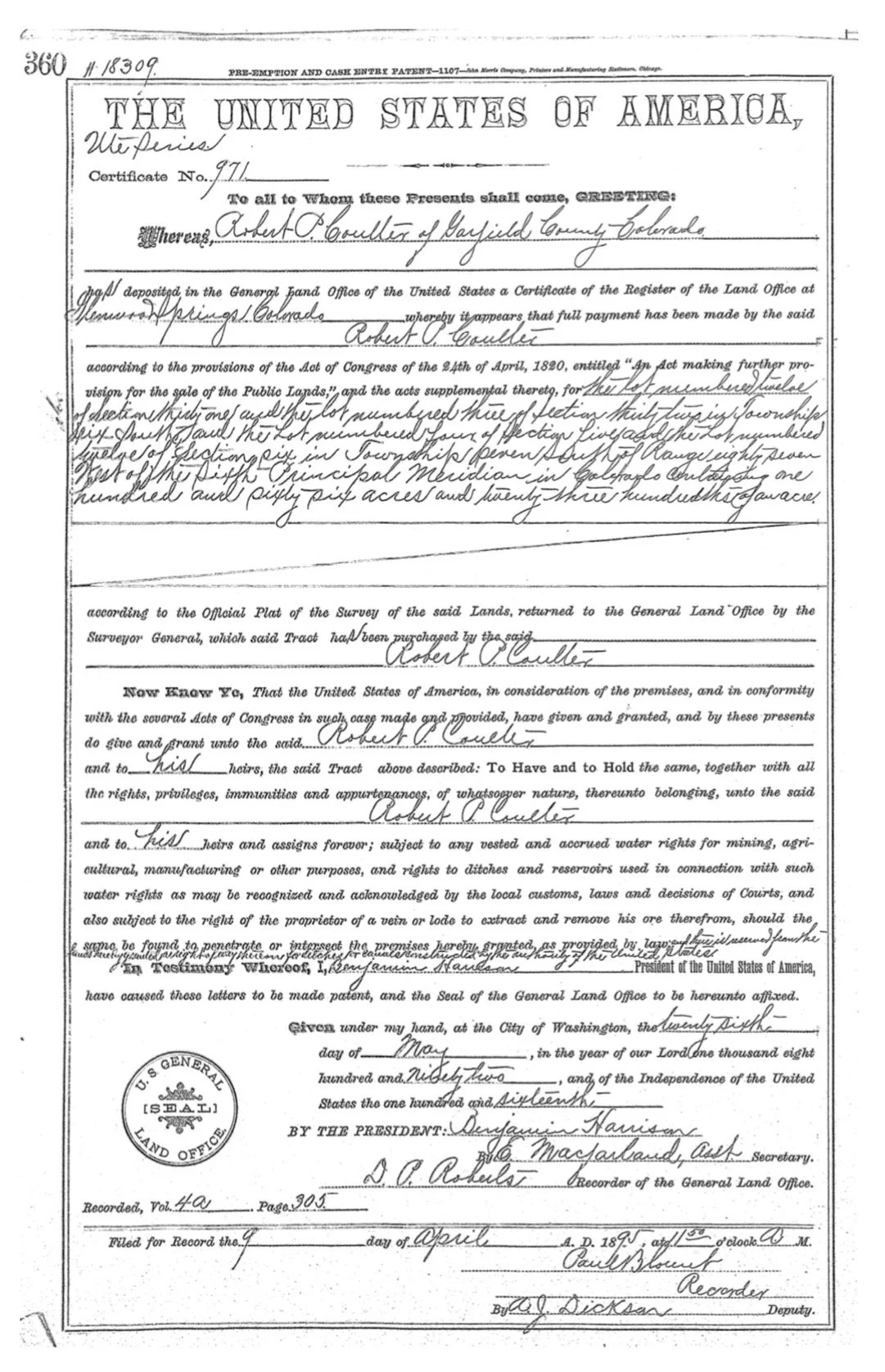
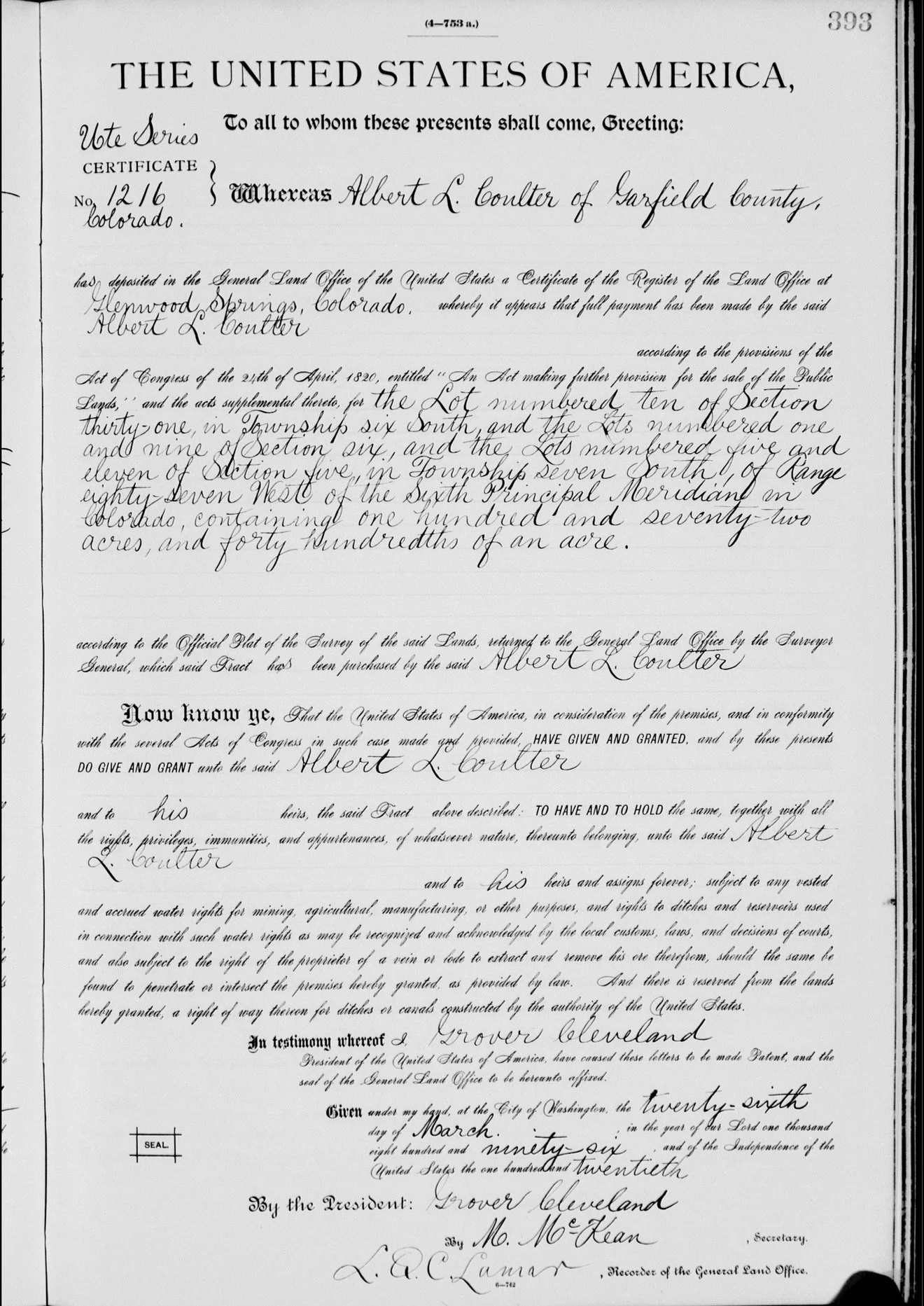
Robert P. Coulter eventually received a federal patent for166.23 acres, issued in 1892. Albert L. Coulter received another patent covering 172.40 acres in 1896. Albert’s patent was identified in federal records as part of the “Ute Series,” a surviving reminder that these early private parcels came from lands that had only recently been part of the Ute homeland.
Unlike the familiar Homestead Act story associated with much of the American West, the Coulter patents were issued as cash-sale entries under the federal land law of 1820. The brothers purchased their parcels from the federal government as the former Ute lands were surveyed and transferred into private ownership.
Together, their patents established an important portion of the lower ranch footprint that remains part of Out of Bounds Ranch today.
Building More Than a Ranch
The Coulters were also part of the beginnings of a permanent community in the Upper Cattle Creek valley.
As families settled the surrounding ranches, roads, irrigation systems and community institutions began appearing across the landscape. One of the most enduring was the Coulter Creek School, later known as theUpper Cattle Creek School, which opened in 1888 at what is now the corner of County Roads 115 and 121.
Local history identifies Albert Coulter as the donor of the school property.
The small schoolhouse would serve generations of ranch families until 1956. It became more than a place for children to learn. Christmas gatherings, dances and community events brought neighboring families together there, helping transform a scattered collection of ranches into a recognizable rural community.
The school remains one of the clearest physical links between the Coulter era and the Missouri Heights community that followed.
A Name Written Across the Landscape
The Coulter brothers lived at an important dividing point in the history of this land.
They belonged to the first generation of ranchers establishing agricultural operations here after the Ute removal and the federal opening of the land. Their ditches helped turn mountain water into hay fields and pasture. Their federal patents helped establish the pattern of private ownership that followed. And the Coulter name became attached to a creek, a ditch, a school and ultimately an entire corner of the Upper Cattle Creek landscape.
Much has changed since Robert and Albert Coulter began working this ground in the 1880s, but traces of their presence remain remarkably visible.
Water still travels through irrigation systems whose histories reach back to their era. Coulter Creek still descends from the high country. The old schoolhouse still stands near the road. And portions of the land first patented to the Coulter brothers remain within Out of Bounds Ranch today.
Their story represents the beginning of the ranch as a documented agricultural property—and the opening chapter of more than a century of ranching history that followed. responsible stewardship begins with understanding that we are only the latest caretakers of a much older landscape. The history of this ranch therefore does not begin with the Smith family, the Gould family, the Coulters, or even with the first federal patent. It begins with the land itself—and with the Ute people who called this country home long before it became a ranch.
Coulter Brothers Circa 1881
The Coulter Brothers: The Beginnings of a Ranch
The recorded ranching history of Out of Bounds Ranch comes into focus in the early 1880s with two brothers whose name still survives across this landscape:Robert P. Coulter and Albert L. Coulter.
The Coulters arrived during a remarkable period of transition in western Colorado. Following the removal of most Ute people from northern and central portions of the Western Slope in 1881, the federal government began surveying and opening portions of the former Ute lands to settlement and purchase.
It was in those first years that the Coulter brothers began establishing themselves in the Upper Cattle Creek country.
Their presence can still be read in the geography. Coulter Creek, the Coulter West Side Ditch, and the historic Coulter Creek School all preserve the family name more than 140 years later.
Water Before Title
One of the most revealing details in the Coulter story is that the agricultural history of the land appears in the records before the brothers received formal title from the United States government.
The Prior Ditch, which diverts water from Coulter Creek, carries an appropriation date of May 10, 1882. The Coulter West Side Ditch followed on June 14, 1883.
Both dates are strikingly early.
They show that within the first years of the opening of this country, water was already being diverted toward land that would eventually form part of Out of Bounds Ranch. In this dry mountain environment, irrigation was essential. Establishing a ranch meant more than occupying land—it meant finding water, constructing ditches by hand, directing it across fields and putting the ground into agricultural production.
For the Coulters, that work began years before the federal government completed the process of conveying title.
Robert P. Coulter eventually received a federal patent for166.23 acres, issued in 1892. Albert L. Coulter received another patent covering 172.40 acres in 1896. Albert’s patent was identified in federal records as part of the “Ute Series,” a surviving reminder that these early private parcels came from lands that had only recently been part of the Ute homeland.
Unlike the familiar Homestead Act story associated with much of the American West, the Coulter patents were issued as cash-sale entries under the federal land law of 1820. The brothers purchased their parcels from the federal government as the former Ute lands were surveyed and transferred into private ownership.
Together, their patents established an important portion of the lower ranch footprint that remains part of Out of Bounds Ranch today.
Building More Than a Ranch
The Coulters were also part of the beginnings of a permanent community in the Upper Cattle Creek valley.
As families settled the surrounding ranches, roads, irrigation systems and community institutions began appearing across the landscape. One of the most enduring was the Coulter Creek School, later known as theUpper Cattle Creek School, which opened in 1888 at what is now the corner of County Roads 115 and 121.
Local history identifies Albert Coulter as the donor of the school property.
The small schoolhouse would serve generations of ranch families until 1956. It became more than a place for children to learn. Christmas gatherings, dances and community events brought neighboring families together there, helping transform a scattered collection of ranches into a recognizable rural community.
The school remains one of the clearest physical links between the Coulter era and the Missouri Heights community that followed.
A Name Written Across the Landscape
The Coulter brothers lived at an important dividing point in the history of this land.
They belonged to the first generation of ranchers establishing agricultural operations here after the Ute removal and the federal opening of the land. Their ditches helped turn mountain water into hay fields and pasture. Their federal patents helped establish the pattern of private ownership that followed. And the Coulter name became attached to a creek, a ditch, a school and ultimately an entire corner of the Upper Cattle Creek landscape.
Much has changed since Robert and Albert Coulter began working this ground in the 1880s, but traces of their presence remain remarkably visible.
Water still travels through irrigation systems whose histories reach back to their era. Coulter Creek still descends from the high country. The old schoolhouse still stands near the road. And portions of the land first patented to the Coulter brothers remain within Out of Bounds Ranch today.
Their story represents the beginning of the ranch as a documented agricultural property—and the opening chapter of more than a century of ranching history that followed.